
Routine · Evening
Caffeine-free evening tea that actually tastes like a treat
A 9 PM cup should feel like a small reward — not a compromise. Yet most caffeine-free teas let people down twice: first on taste, then on freshness. Here is what actually goes wrong, and how to choose a wind-down cup you'll genuinely reach for.
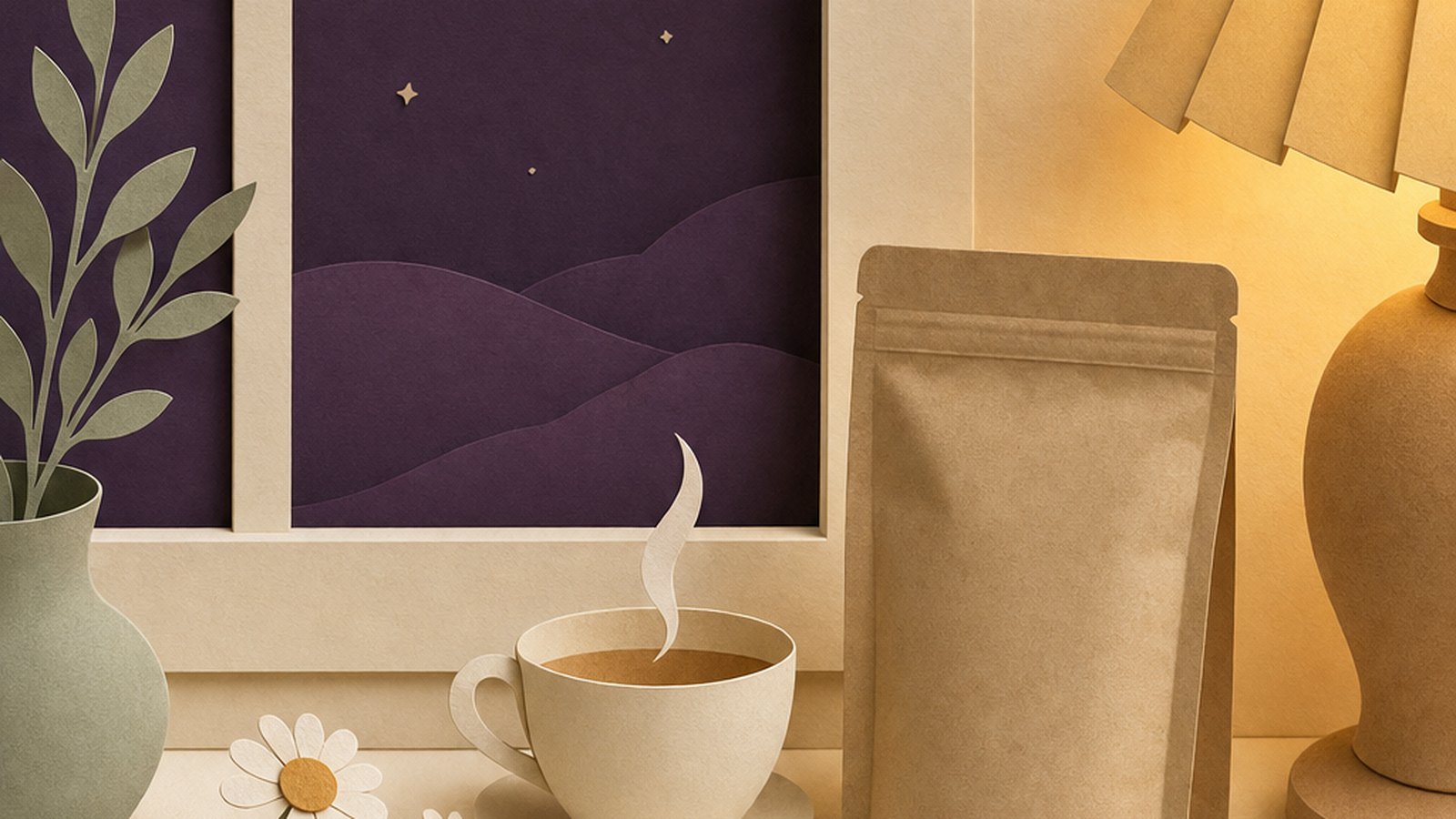
There is a real moment a lot of people are trying to fill: the evening drink. Folks who watch caffeine for sleep, anxiety, or heart reasons go looking for "a cozy afternoon or a soothing evening drink," and end up cycling through rooibos, chamomile and barley, never quite settling. The demand is genuine. The disappointment is too.
The first letdown: evening tea that doesn't taste good
Open any tea forum and the evening category takes a beating. One drinker described a popular chamomile as tasting "like damp leaves and flowers that have been wet for a really long time," adding that they were stuck with 40 bags they "couldn't fix with honey." Another summed up a common arc: "I would get herbal blends and find them all gross." Chamomile especially splits people right down the middle.
The lesson isn't "chamomile is bad." It's that a single, divisive note served on its own is a coin flip. A wind-down cup is far more reliable when it's built on a rounder, naturally sweet base and kept simple enough that you can taste what you're drinking.
The second trap: "caffeine-free" that isn't quite
If the reason you're drinking tea at night is to avoid caffeine, the label matters. Decaffeinated tea still starts from the tea plant and keeps a little caffeine after processing — commonly in the range of 1 to 8 mg per cup. The only genuinely zero-caffeine option is an herbal tisane, made from botanicals rather than tea leaves. That's why a true evening cup should be a tisane, not a decaf.
The quiet killer: freshness
Even a well-chosen blend disappoints if it's gone flat. The bright, floral, fruity top notes in herbs are volatile — they start escaping within weeks to months of meeting air. Drinkers describe the result vividly: stale tea that "turns into hay water," a "dusty note" that's "very real," and the blunt rule that "the expiry date is the date it stops to taste good." The aroma is most of the treat, and it's the first thing to go.
Why packaging is half the answer
Freshness isn't just about how old a tea is — it's about how it's stored. Aroma fades fastest with heat, moisture, oxygen and light, so the fix is an airtight, opaque, moisture-barrier package. Clear glass lets light in; thin paper offers no moisture barrier; and finely cut tea bags lose aroma faster than whole leaf because of all that extra surface area exposed to air.
There's a happy overlap here. The same plastic-free, high-barrier packaging that keeps a blend tasting fresh is also what plastic-conscious buyers are hunting for when they complain that good loose leaf is "typically packaged in plastic bags or small tins." Freshness and sustainability point at the same answer.
How to choose a 9 PM cup worth drinking
Put it together and the checklist is short:
- Make it a tisane, so it's truly caffeine-free — not a decaf.
- Start from a rounder base like rooibos or honeybush, with chamomile or lavender as an accent rather than the whole show.
- Keep the blend simple — a handful of botanicals you can name, so you actually know what you like.
- Demand freshness — opaque, airtight, high-barrier packaging, and store it cool, dry and dark at home.
This is exactly how we build Varitea: caffeine-free tisanes curated by daypart, kept simple, and protected by opaque high-barrier packaging so the cup tastes the way it should at 9 PM.
Make tonight's cup a treat
First Sip Box · $19
Three honest, caffeine-free cups — including a wind-down blend for the evening.
Frequently asked
Is decaf tea the same as caffeine-free?
No. Decaf starts from the tea plant and keeps a small amount of caffeine (commonly ~1–8 mg per cup). A true caffeine-free cup comes from herbal tisanes, which are made from botanicals and contain none.
Why does my chamomile or herbal tea taste bland or like hay?
Partly taste — chamomile is divisive — and partly freshness. Herbal aromas are volatile and fade with air, light and time, so an older or poorly packaged blend can taste flat. A simple blend on a rooibos or honeybush base, kept fresh, usually tastes rounder.
How do I keep loose herbal tea fresh?
Keep it from heat, moisture, oxygen and light: an airtight, opaque container in a cool, dry, dark place, away from strong smells. Avoid clear glass and thin paper. Whole-leaf holds aroma longer than fine tea-bag cut.
Varitea blends are caffeine-free herbal infusions intended as everyday beverages. They are not intended to diagnose, treat, cure or prevent any disease. If you are pregnant, nursing, or managing a health condition, check with a clinician before adding new herbs to your routine.
Coming next → A wind-down ritual you'll keep: how to anchor a caffeine-free cup to your existing bedtime routine so it actually sticks.
Related → The science of caffeine-free tisanes · Why we built Varitea around your day